
'Energy prices would shoot up with the closure of Hormuz again.'

Rahul Gandhi accuses the government of compromising India's energy security by allowing the US to dictate oil supply relationships, raising concerns about the impact of global conflicts on India's energy access.

State-run Oil and Natural Gas Corporation (ONGC) has approved the development of a 1.75 million tonnes (mt) strategic petroleum reserve (SPR) in Mangaluru, a project deemed of national importance, with plans for broad commercial utilisation.

Top commanders of the Indian Navy will discuss the implications of the West Asia crisis on India's energy security and review operational readiness at a three-day conference.

External Affairs Minister S Jaishankar discussed the West Asia conflict's impact on the global economy, particularly energy security, with US Secretary of State Marco Rubio. He also engaged with GCC ambassadors and his Sri Lankan and German counterparts on the same issue.

Despite decades of efforts towards energy transition, oil will remain the critical energy source for all nations for some decades. We can hope for peace opening the Strait of Hormuz, but must prepare for war closing it, points out former foreign secretary Ranjan Mathai.

Gautam Adani emphasised the importance of energy security and digital infrastructure in shaping geopolitical power, urging India to develop sovereign capabilities across the AI value chain.

Prime Minister Narendra Modi on Thursday discussed with a group of senior ministers the prevailing global security situation and how to maintain supply chain uninterrupted despite conflicts in different zones, including the Strait of Hormuz, the Black Sea, the Red Sea, and the Gulf of Aden.

Prime Minister Narendra Modi will chair a meeting with senior ministers to assess the petroleum, power, and fertiliser sectors in light of the ongoing situation in West Asia, focusing on ensuring uninterrupted supply and stable logistics.
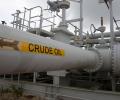
MEA spokesperson Randhir Jaiswal said India's energy decisions are guided by national interest.

India addresses the escalating conflict in West Asia, outlining its diplomatic efforts to ensure energy security, the safety of its citizens, and advocating for a peaceful resolution through dialogue.

Prime Minister Narendra Modi has begun a six-day tour of the UAE, the Netherlands, Sweden, Norway and Italy to strengthen bilateral relations amid geopolitical challenges. The trip will focus on energy security, trade, and technological cooperation.
Prime Minister Narendra Modi will chair a meeting with senior ministers to review the petroleum, power, and fertiliser sectors in light of the evolving situation in West Asia, focusing on ensuring uninterrupted supply and stable logistics.
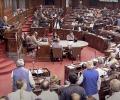
Opposition MPs in the Rajya Sabha criticised the Modi government's economic policies, citing the LPG crisis, lack of energy security, and concerns over the Economic Stabilisation Fund.

India's foreign secretary Vikram Misri on Thursday participated in a high-level meeting hosted by the United Kingdom on the evolving situation in West Asia, underlining concerns over maritime security, energy supply disruptions and the need for diplomatic de-escalation.
Industry experts and the India Energy Storage Alliance (IESA) advocate for a unified framework to address the significant supply gap in domestic cell manufacturing, crucial for enhancing India's energy storage capabilities and reducing reliance on imports.

There is no cause for concern, as the overall situation arising out of the crisis is firmly under control, the Centre informed while briefing political parties at the all-party meet.

India is significantly expanding its crude oil sourcing to Latin America, with Venezuela emerging as a major supplier, as geopolitical disruptions in the Middle East and the Strait of Hormuz compel the world's third-largest oil consumer to diversify its energy supplies.
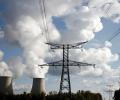
India's brittle energy security is inextricably linked to two opposing paradigms - fossil fuels, and the transition to green energy. The first powers the present; the second paves the way for Viksit Bharat in 2047.
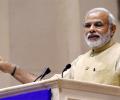
Prime Minister Narendra Modi, in his Independence Day address, highlighted technology and innovation as central to India's goal of becoming a developed nation by 2047. He called for India to lead in emerging technologies like AI, quantum computing, and space, announcing a massive AI skilling initiative for one crore youth. Modi stressed the importance of becoming a global innovation hub, bolstering energy security with nuclear power, and strengthening cybersecurity.

Prime Minister Narendra Modi has highlighted the risks posed by the 'weaponisation' of resources and strategic sea routes, urging India to achieve greater self-reliance in energy to mitigate vulnerabilities to overseas supplies and geopolitical tensions.

China sailed through the crisis in the Strait of Hormuz relatively unscathed even as the impact of its steps shielded other consuming nations from having to pay high crude oil prices.

The India-Oman free trade agreement, operationalised on June 1, is set to create significant export opportunities for India's labour-intensive and value-added sectors, including textiles, gems and jewellery, and marine products, while also strengthening energy security.
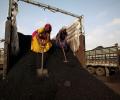
State-owned Coal India Ltd (CIL) and ArcelorMittal Nippon Steel India (AMNS) have signed an MoU to explore setting up a coal gasification plant near AMNS's Paradip pellet plant in Odisha. This initiative aims to produce synthesis gas for cleaner steel production, reduce reliance on imported fuels, and align with India's goal of gasifying 100 million tonnes of coal by 2030, supported by a Rs 37,500-crore government incentive scheme.

Maruti Suzuki India Ltd has launched the Wagon R, India's first flex-fuel car, capable of running on any blend of ethanol and petrol from E20 to E100, aligning with national energy security and sustainability goals.

BJP MP Janardan Mishra has strongly defended the Centre's ethanol blending policy amidst ongoing controversy, highlighting India's high crude oil import dependency and global geopolitical challenges. He questioned opponents of ethanol blending, citing Brazil's successful use of 100 per cent ethanol in vehicles and experts' views on its engine compatibility.

The Indian government has dismissed concerns that the use of E20 fuel could affect the validity of vehicle insurance policies, stating that the ethanol blending programme remains safe, consumer-friendly, and economically beneficial.

US Vice President JD Vance and Prime Minister Narendra Modi held a phone call to discuss expanding the India-US comprehensive global strategic partnership, focusing on trade, defence, energy security, emerging technologies, and critical minerals. The discussion comes amidst rising tensions in West Asia and recent regional realignments, with both leaders reaffirming their commitment to strengthening cooperation.

AAP chief Arvind Kejriwal is leading a march to the Prime Minister's residence to submit a petition with two lakh signatures against E20 petrol. He is demanding consumer choice, lower E20 prices, and transparency regarding studies supporting the fuel. The government defends the E20 programme, citing energy security and no evidence of vehicle harm.

Amidst rising Middle East tensions, External Affairs Minister S Jaishankar highlights India's strategic dialogue with Iran to safeguard maritime traffic through the Strait of Hormuz, ensuring India's energy security and continued oil trade.
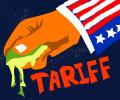
A bipartisan group of US senators has introduced a comprehensive bill imposing extensive sanctions on Russia, with India identified as one of five countries that could incur tariffs for its continued purchase of Russian oil.
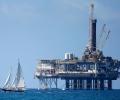
State-run Oil and Natural Gas Corporation (ONGC) Ltd reported a 112 per cent year-on-year increase in standalone net profit for Q1 FY27, reaching 17,034 crore, primarily due to higher crude oil prices and increased realisations from new well gas. Despite a consolidated net profit decline due to HPCL's losses, ONGC's core upstream business showed robust growth.

India and Australia have signed significant agreements covering civil nuclear energy, maritime security, and critical minerals, reinforcing their partnership's role in ensuring a peaceful Indo-Pacific. The pacts facilitate uranium supply from Australia to India and enhance cooperation in defence, cyber, and critical technologies.

'India is vulnerable to the West Asia crisis in three ways: Energy costs, the business Indian companies conduct in the region, and remittances from the Indian diaspora.'

Japan is deepening its defence relationship with India while simultaneously expanding its economic, infrastructure and security engagement with countries around India -- particularly Bangladesh. The result is an emerging Japanese conception of South Asia in which India remains the strategic anchor, but the geography surrounding India is becoming increasingly important, points out Varun Arya.

Notwithstanding the economic complementarities and the host of agreements for deepening economic relation on a host of areas, both sides share common viewpoints on the foreign policy domain and seek common grounds to serve as a counterweight to China, notes Dr Rajaram Panda.

Global investment firm KKR remains optimistic about India's long-term growth, citing rising incomes, premiumisation, financial deepening, and demand for quality services as key drivers for its consumption story, even as higher energy prices and AI disruption pose near-term challenges.

External Affairs Minister S Jaishankar has strongly defended India's decision to purchase Russian crude oil, stating that the country's energy choices are based on cost and availability, and highlighting the West's 'hypocrisy' in criticising India while historically supplying weapons used against it.

Prime Minister Narendra Modi, in his 80th Independence Day address, expressed strong confidence that India will achieve developed nation status by 2047, urging citizens to embrace big dreams and unwavering resolve to realise 'Viksit Bharat'. He highlighted India's economic transformation and significant growth in various sectors, including defence production, electronic manufacturing, and mobile phone production.

Foreign secretary Vikram Misri on Friday shared key details on agreements between India and the UAE, stating that the UAE will store up to 30 million barrels of crude oil in India's strategic petroleum reserve following Prime Minister Narendra Modi's visit.
